High-performance bearings are crucial for various industries, from aerospace to automotive. The efficiency and durability of these components rely heavily on the materials used in their construction. Understanding what materials are used in high performance bearings can help engineers select the right options for specific applications.
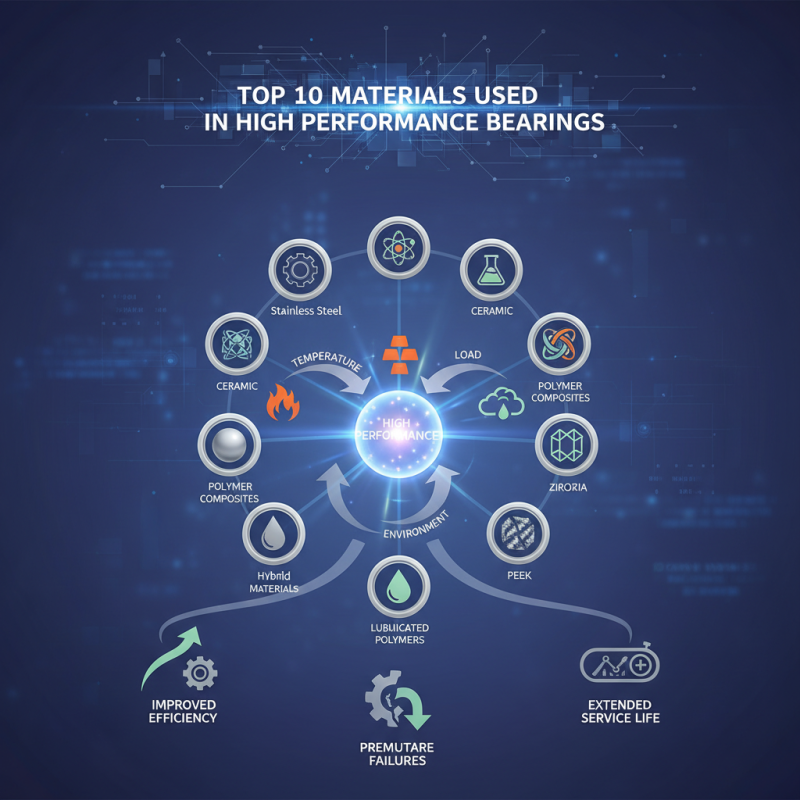
Typical materials include stainless steel, ceramic, and polymer composites. Each material offers unique benefits, such as resistance to corrosion or reduced friction. As technology advances, manufacturers continually explore innovative materials to enhance performance.
However, not all materials perform well under every condition. Factors like temperature, load, and environment can affect performance. Engineers must carefully consider these aspects when designing or selecting bearings. The right choice can lead to improved efficiency and extended service life, while an oversight may result in premature failures.
High performance bearings are crucial in various industries, from aerospace to automotive. They enhance efficiency and longevity in machinery. These bearings can withstand extreme conditions, thus ensuring reliability in performance. According to a report by Research and Markets, the high-performance bearing market is projected to grow steadily, reaching USD 15 billion by 2025.
Applications for high-performance bearings span countless sectors. In the automotive industry, they are vital for reducing friction, improving fuel efficiency, and extending the lifespan of components. In aerospace, these bearings are designed to tolerate high speeds and rapid temperature shifts. A study by the American Society of Mechanical Engineers noted that proper bearing selection can lead to a 30% reduction in energy loss over time.
Despite technological advancements, manufacturers face challenges. Not every material performs well under stress. Some materials can degrade quicker than expected, especially in harsh environments. Regular assessment of bearing conditions is vital. Understanding the specific requirements for each application is crucial for optimal performance. Mistakes in material selection can lead to costly downtimes and failures. This highlights the importance of ongoing education and research in the bearing industry.
Selecting the right materials for high-performance bearings is challenging. Engineers often face a trade-off between strength and weight. Common issues arise when materials cannot withstand environmental stressors. For example, bearings in humid conditions may rust, leading to failure. Similarly, high temperatures can degrade some polymers.
Different applications demand specific properties. Some bearings require low friction, while others need high wear resistance. This diversity complicates material selection significantly. Engineers must consider thermal expansion, corrosion resistance, and load capacity. Balancing these factors is not simple. Sometimes, even the best materials can fall short in unexpected scenarios.
Cost is another significant concern. High-performance materials often come at a premium. This can limit options for many projects. Engineers might need to compromise on certain properties to stay within budget. Decisions made during this phase can lead to regret later. Each choice has long-term implications on efficiency and maintenance.
High performance bearings are essential in many industries, including aerospace and automotive sectors. The materials used in these bearings directly impact their efficiency and durability. A report by the International Journal of Aerospace Engineering highlights that ceramic and polymer materials are increasingly favored. These materials often offer lower friction coefficients, which translates to better performance in demanding environments.
Ceramics, like silicon nitride, exhibit excellent wear resistance and can operate at higher temperatures. They often weigh less than traditional steel. However, they are more brittle and can be prone to cracking under certain stress conditions. On the other hand, polymers such as PTFE provide unique advantages, including superior chemical resistance and reduced weight. Nonetheless, polymers generally have lower load-bearing capacities.
Another interesting material used is stainless steel, known for its corrosion resistance. Yet, its performance can diminish in specific high-stress applications. A study published by the American Society of Mechanical Engineers indicates that the choice of bearing material should reflect specific operational needs. Each material offers distinct benefits and drawbacks. Selecting the wrong one could lead to premature failure, highlighting the need for careful consideration during material selection.
Steel alloys play a crucial role in the manufacturing of high-performance bearings. These materials are engineered to withstand extreme conditions. Their strength-to-weight ratio is essential for efficient function in various applications, from automotive to aerospace. Current industry reports highlight that 70% of all bearings produced use some form of steel alloy. This prevalence underscores their importance in ensuring durability and performance.
One common steel alloy for bearings is AISI 52100. It is known for its excellent hardness and wear resistance. According to analysis, bearings made from AISI 52100 can achieve a hardness of up to 65 HRC. However, while this material is robust, it has limitations. Its susceptibility to corrosion can impact longevity in certain environments. This aspect requires manufacturers to consider additional protective coatings.
While the strength of steel alloys is well documented, challenges remain in minimizing costs without compromising quality. Recent surveys indicate that 45% of manufacturers struggle with balancing these factors. Continuous innovation in alloy compositions may lead to advancements. However, relying solely on traditional options might stifle overall progress in bearing technologies. Addressing these nuances in material choice is critical for future developments.
| Material | Density (g/cm³) | Yield Strength (MPa) | Hardness (HRc) | Corrosion Resistance |
|---|---|---|---|---|
| Chromoly Steel | 7.85 | 650 | 28-36 | Moderate |
| Stainless Steel (440C) | 7.75 | 900 | 58-60 | Excellent |
| Carbon Steel | 7.85 | 500 | 20-25 | Poor |
| Titanium Alloys | 4.43 | 900 | 36-40 | Excellent |
| Nickel Alloys | 8.5 | 700 | 40-45 | Very Good |
| Ceramics | 3.9 | 500 | 80-90 | Excellent |
| Polymer Materials (PTFE) | 2.2 | 45 | Not Applicable | Good |
| Cobalt Alloys | 8.3 | 1,200 | 40-50 | Excellent |
| Aluminium Alloys | 2.7 | 300 | 20-25 | Moderate |
| Bimetallic Composites | Varies | Varies | Varies | Good |
The exploration of polymer and composite materials in bearings reveals significant advancements in performance and durability. Recent industry reports indicate that polymer bearings can withstand extreme temperatures, ranging from -40°C to 200°C, and often outperform traditional steel bearings in corrosive environments. These materials offer lower friction coefficients, contributing to energy efficiency and extending the lifespan of machinery.
Composite materials, which combine fibers and resins, enhance the strength-to-weight ratio in bearings. A study published by the Society of Tribologists and Lubrication Engineers demonstrates that some composite bearings can reduce weight by up to 50% compared to their metal counterparts. However, reliance on polymers and composites can come with challenges. Certain composites may exhibit susceptibility to wear in high-load applications, which is an area that requires ongoing research and potential improvements.
Furthermore, the manufacturing process of polymer and composite bearings can impact their consistency and reliability. Variations in material properties may arise during production, leading to unpredictable performance under load. This highlights the need for rigorous testing standards and quality control measures. The continued innovation in this space is promising, but there remains room for refinement in material formulations and processing techniques to enhance performance predictability.
: The main challenge is balancing strength and weight while ensuring resistance to environmental stressors.
Bearings can rust in humid conditions, which often leads to failure over time.
Applications may need low friction, high wear resistance, or specific thermal expansion properties.
High-performance materials can be expensive, leading to compromises that may affect efficiency later.
AISI 52100 is recognized for its hardness and wear resistance but has corrosion susceptibility.
These materials can handle extreme temperatures and typically provide lower friction coefficients.
Some composites may wear out more quickly under high loads, requiring further research.
Variations during production may lead to inconsistent performance and reliability under load.
Some composite bearings can reduce weight by up to 50% compared to metal alternatives.
Continuous innovation is crucial to address weaknesses and improve performance predictability.
High performance bearings play a crucial role in various applications, requiring careful selection of materials to meet demanding performance standards. Common challenges in bearing materials selection include factors such as load resistance, wear, lubrication, and temperature stability. To address these challenges, a variety of materials are employed, including advanced steel alloys known for their strength and durability, as well as polymer and composite materials that offer lightweight and corrosion-resistant alternatives.
In-depth analysis reveals that steel alloys remain the most widely used materials in bearing manufacturing due to their resilience under heavy loads and ability to withstand fatigue. Conversely, polymers and composites present innovative solutions where weight reduction and chemical resistance are priorities. Thus, understanding what materials are used in high performance bearings is essential for optimizing their applications across different industries, ensuring reliability and efficiency in operations.

Ebmotrix Bearings