Bearing performance rarely fails for one reason. It changes through load, speed, lubrication, temperature, contamination, alignment, and installation quality. Understanding what factors affect bearing performance helps engineers connect laboratory ratings with real operating conditions.
Dr. Tedric A. Harris, a widely respected authority on rolling-bearing analysis, wrote, “The life of a rolling bearing is defined as the number of revolutions which the bearing runs before the first evidence of fatigue develops.” His statement remains useful because fatigue life is only one measurement. A bearing may meet its calculated life while producing excessive noise, heat, vibration, or friction.
The details are often physical and surprisingly small. A thin oil film can separate metal surfaces inside a bearing operating at high speed. A single hard contaminant may create a visible dent on a raceway. Misalignment can concentrate contact stress along one edge instead of distributing it evenly. Excess grease may raise temperature, while insufficient grease can leave rolling elements exposed.
Installation also matters. A hammer blow through the wrong ring can damage the raceway before operation begins. Shaft fits, housing tolerances, preload, and mounting cleanliness deserve careful inspection. Sensors can reveal rising vibration, but they cannot replace sound engineering judgment. That is where this topic becomes less comfortable: calculations are useful, yet real machines are imperfect.
This guide examines what factors affect bearing performance through practical evidence, established bearing theory, and field-based reasoning. It also recognizes uncertainty. Ambient conditions change, maintenance records may be incomplete, and manufacturers use different rating assumptions. Reliable decisions therefore require measurement, correct specifications, and continuous review rather than confidence in one number.
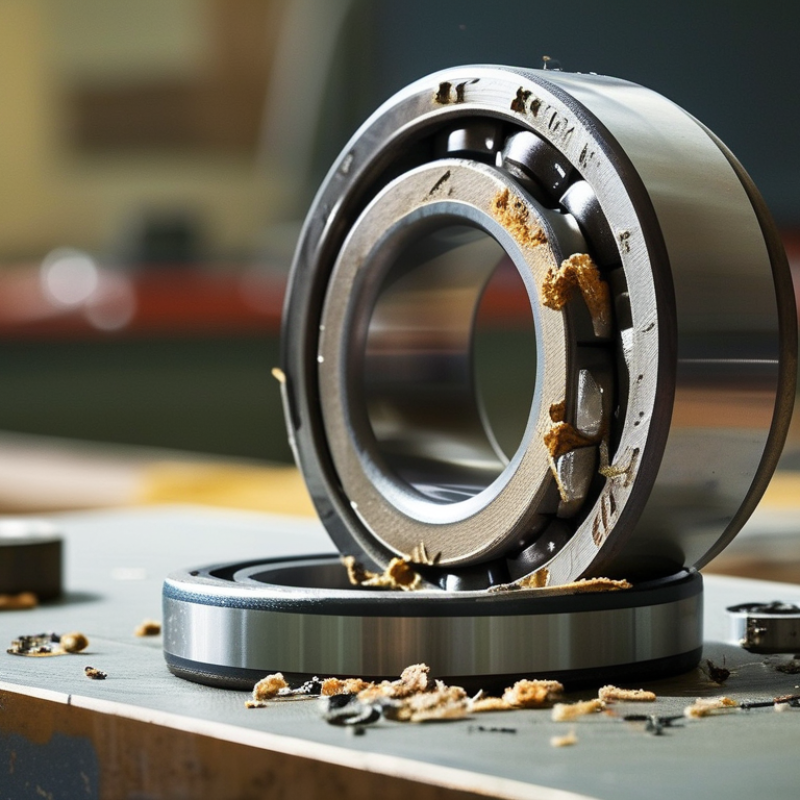
Bearing performance depends on load, speed, lubrication, alignment, contamination, and operating temperature. The core evaluation begins with dynamic load rating and rating life. ISO 281:2007 defines L10 life as the operating life reached by 90% of identical bearings under stated conditions. This is useful, but not a promise. Real machines face vibration, shock loads, poor fits, and changing temperatures.
Lubrication deserves close attention. A thin oil film can allow metal contact, while excess grease may raise temperature and resistance.
The U.S. Department of Energy’s Operations & Maintenance Best Practices Guide reports that predictive maintenance can reduce costs by 8–12% compared with preventive maintenance. It may also reduce costs by 30–40% compared with reactive maintenance.
These figures apply broadly, not only to bearings, but they show why condition data matters. Vibration trends, temperature readings, noise, and lubricant samples create a more reliable performance picture.
Installation quality is often underestimated. A bearing mounted with uneven force may show early raceway marks within weeks. Misalignment can produce localized wear on one side of the raceway. ISO 15243:2017 links visible damage patterns with causes such as fatigue, corrosion, electrical erosion, and handling defects.
Field experience suggests that inspection records are still incomplete in many plants. That weakens diagnosis.
A clean photo, measured clearance, and exact operating history can reveal more than a quick replacement. Perfect control is unrealistic. Disciplined measurement is not.
: Hardened steel suits heavy loads and repeated impacts. Ceramic elements resist corrosion and reduce electrical conductivity concerns. However, brittle surfaces may fail under sudden shock. Consider load, speed, temperature, moisture, and nearby particles.
No. Corrosion resistance may matter more in wet or contaminated equipment. A suitable material can still fail when housing design is poor. Material selection alone is incomplete.
Too little grease allows direct contact between rolling surfaces. Too much grease creates heat and increases resistance. More grease is not always better. That mistake is easy to miss.
Inspect grease texture, smell, and discoloration during scheduled maintenance. Darkening may suggest oxidation, contamination, or overheating. These signs need temperature and vibration readings for confirmation.
Fine dust can enter through a seal and mix with lubricant. The mixture may behave like abrasive paste. Moisture can cause corrosion, especially during repeated shutdowns. Condensation is easy to overlook.
Clean, smooth, correctly sized shaft and housing seats support even contact. A small burr can create local stress. Excessive mounting force may damage raceways before operation begins.
Use the correct installation tools. Apply force only to the fitted ring. Never transfer impact through rolling elements. Small errors can create large wear later.
Excessive preload increases heat. Excessive clearance allows movement and vibration. Tight seals reduce contamination but may increase drag. The best setting depends on speed, load, and environment.
Record temperature, vibration, installation conditions, and nearby air conditions. Rising temperature may indicate lubrication trouble, but not always. I once made that assumption, and it was incomplete.
Bearing performance depends on how effectively a bearing supports loads, controls friction, and maintains smooth, reliable motion over time. Key evaluation criteria include load capacity, operating temperature, vibration, noise, service life, and dimensional stability. To understand what factors affect bearing performance, it is important to consider the load type and magnitude, rotational speed, acceleration, alignment, and movement pattern. Material selection also plays a major role, since the right combination of strength, hardness, fatigue resistance, and corrosion protection can improve durability under specific working conditions.
Proper lubrication reduces friction, wear, and heat, while unsuitable or contaminated lubricant can quickly cause damage. Environmental conditions such as dust, moisture, chemicals, temperature changes, and shock may further reduce performance. Accurate installation is equally essential because misalignment, excessive tightening, contamination, or improper handling can create abnormal stress. Regular inspection, cleaning, lubrication, and timely replacement help prevent common problems, including overheating, noise, vibration, surface fatigue, and premature failure.

 Ebmotrix Bearings