Which Industries Rely Heavily on Bearing Systems?

Time:2026-10-24 Author:Oliver
0%

Which industries rely heavily on bearing systems? The answer reaches far beyond automotive factories. Bearings support shafts, reduce friction, manage loads, and keep rotating equipment stable. A failed bearing can stop a conveyor, delay a train, or disable a wind turbine during severe weather.

Automotive manufacturers use bearing systems in wheels, transmissions, electric motors, and steering assemblies. Rail operators depend on them beneath heavy carriages traveling thousands of kilometers each week. Aerospace companies demand extremely precise bearings for engines, landing gear, and flight-control systems. Manufacturing plants place them inside pumps, compressors, robots, and machine tools. Even a small alignment error can create heat, vibration, and costly downtime.

“Bearing performance is a system issue, not just a component issue,” says Dr. Tedric A. Harris, a widely recognized authority on rolling-element bearing analysis. His point remains practical. Lubrication, sealing, shaft alignment, load variation, and maintenance schedules all influence bearing life. The bearing itself is only one piece.

Renewable energy adds another demanding application. Wind turbines use large bearings inside their main shafts, gearboxes, and blade-pitch systems. Construction equipment faces similar pressure, with dust, shock loads, and uneven ground attacking every rotating joint. Medical imaging machines also require quiet, accurate motion in confined spaces.

Some industries receive more attention than others. That can be misleading. Agricultural harvesters, food-processing lines, and warehouse automation also depend on continuous bearing performance. Engineers still make mistakes when they select by load rating alone. Real operating conditions are less tidy. This article examines which industries rely heavily on bearing systems and why reliability begins with the entire operating environment.
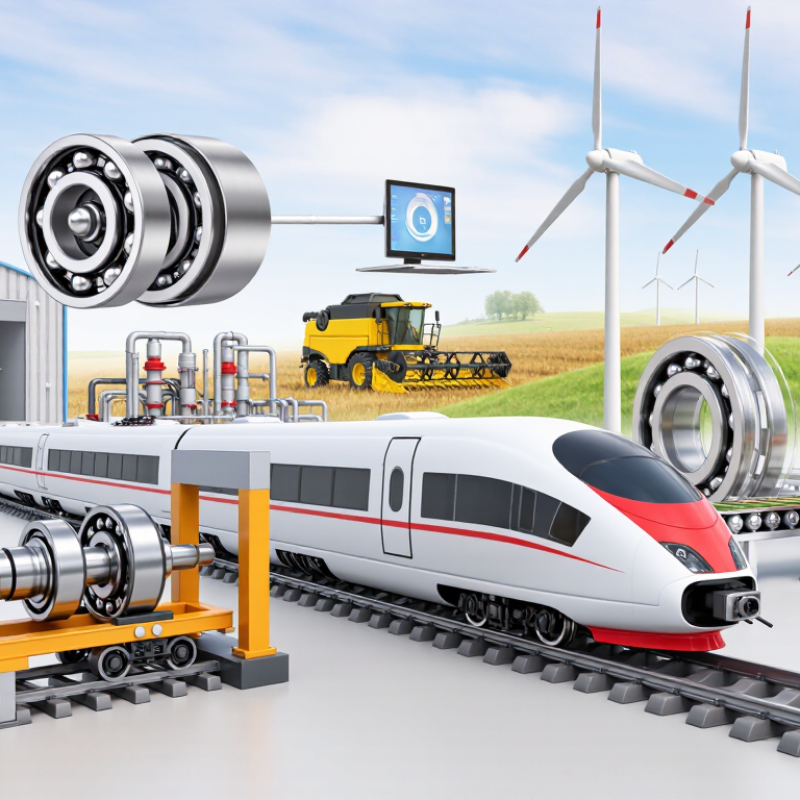
Which Industries Rely Heavily on Bearing Systems?

What Are Bearing Systems and Why Are They Essential?

Bearing systems are assemblies that support rotating shafts, control friction, and manage radial or axial loads. A typical system may include rolling elements, races, seals, lubrication, and monitoring sensors. It is not merely a metal ring. It is a controlled interface between moving parts.

The U.S. Department of Energy reports that motor-driven equipment consumes about 69% of industrial electricity in the United States. Efficient bearing systems help reduce friction, heat, and vibration across pumps, compressors, conveyors, and machine tools. Small losses become expensive when equipment operates continuously. In a steel mill, for example, poor lubrication can turn a smooth shaft into a noisy, overheated failure point. Downtime follows quickly.

They support modern infrastructure.

The International Energy Agency’s Energy Efficiency 2023 report identifies industry as a major global energy consumer, reinforcing the value of reducing mechanical losses. Bearing systems also protect alignment and extend component life in wind turbines, rail vehicles, aircraft, and medical equipment. ISO 15243 provides a recognised framework for analysing bearing damage, including fatigue, wear, corrosion, and electrical erosion. Yet field decisions are not always perfect. Maintenance records may be incomplete, and vibration readings can be misinterpreted. Reliable practice requires correct load calculations, suitable lubrication, regular inspection, and honest review of failures. A bearing system works best when design and maintenance are treated as one engineering responsibility.

Which Industries Rely Heavily on Bearing Systems?

Bearing systems reduce friction, support rotating loads, and maintain alignment in machinery. The chart shows a relative reliance index from 1 to 5, based on how extensively each industry uses rotating equipment, conveyors, gearboxes, turbines, pumps, and precision motion systems.

Reliance index: 1 = limited use of bearing systems; 5 = extensive and mission-critical use.

Which Manufacturing Industries Depend on Bearing Systems?

Which Industries Rely Heavily on Bearing Systems?

Which Manufacturing Industries Depend on Bearing Systems?

Bearing systems support countless manufacturing operations by reducing friction, handling loads, and guiding rotating parts. In automotive plants, they operate inside assembly robots, conveyors, presses, and machining centers. A failed bearing can stop a production cell within minutes. Metalworking facilities face even harsher conditions. Their bearings must tolerate heavy loads, vibration, metal dust, and high temperatures near rolling mills.

Food and beverage manufacturers depend on bearings in mixers, filling machines, pumps, and conveyor lines. These systems require smooth motion and careful hygiene control. Paper mills use bearings in rollers that run continuously at high speed. Plastic manufacturers also rely on them in extruders, cooling systems, and material-handling equipment. Semiconductor production demands another level of precision. Tiny alignment errors can affect delicate components. Clean environments matter greatly.

Tips: Match the bearing to the load, speed, temperature, and surrounding contaminants. Check unusual noise, rising temperature, or repeated vibration early. Keep inspection records with operating conditions, not only replacement dates. A perfect maintenance plan rarely exists. Production pressure changes priorities. Teams may also overlook misalignment after repairs, which can shorten service life. Practical inspections, correct installation, and timely lubrication usually prevent small defects from becoming expensive downtime. Condition monitoring adds useful evidence, but it cannot replace experienced technicians who understand the machine’s actual behavior.

Which Industries Rely Heavily on Bearing Systems? - Which Manufacturing Industries Depend on Bearing Systems?

Industry Typical Bearing Dependency Major Equipment and Machinery Common Bearing Systems Primary Operating Conditions Why Bearings Are Critical
Automotive Manufacturing Very High Wheel assemblies, transmissions, electric motors, pumps, conveyors and robotic production cells Ball bearings, roller bearings, tapered roller bearings and spherical roller bearings High rotational speed, vibration, variable loads, temperature changes and contamination Bearings support rotating shafts, reduce friction and maintain dimensional accuracy, vehicle safety and production-line uptime.
Aerospace Manufacturing Very High Aircraft engines, landing gear, flight-control actuators, auxiliary power units and precision testing equipment Precision ball bearings, cylindrical roller bearings, spherical bearings and specialized thin-section bearings High speed, low weight requirements, temperature extremes, strict cleanliness and demanding reliability requirements Bearing performance directly affects rotational accuracy, vibration control, operating life and the safety of flight-related systems.
Wind Energy Equipment Very High Rotor shafts, main gearboxes, generators, pitch systems and yaw systems Spherical roller bearings, cylindrical roller bearings, tapered roller bearings and slewing bearings Heavy loads, fluctuating torque, wind-induced vibration, moisture and outdoor temperature variation Bearings transfer rotor and gearbox loads while enabling continuous rotation in equipment that is difficult and costly to service.
Industrial Machinery Manufacturing Very High Machine tools, compressors, pumps, gearboxes, material-handling systems and automated production equipment Deep-groove ball bearings, angular-contact ball bearings, cylindrical roller bearings and thrust bearings Continuous duty, high speed, shock loads, precision requirements and exposure to cutting fluids or dust Bearings determine machine accuracy, spindle performance, energy efficiency, service life and maintenance intervals.
Railway Equipment Manufacturing Very High Wheelsets, traction motors, gearboxes, axleboxes, doors and auxiliary systems Tapered roller bearings, cylindrical roller bearings, spherical roller bearings and insulated motor bearings High radial and axial loads, shock, vibration, weather exposure and long operating cycles Bearings support wheel and axle rotation, maintain running stability and contribute to passenger and freight transport reliability.
Construction and Mining Equipment High Excavators, crushers, drilling rigs, loaders, conveyor systems and heavy-duty gearboxes Spherical roller bearings, tapered roller bearings, spherical plain bearings and slewing bearings Extreme shock loads, dust, mud, impact, low-speed operation and harsh outdoor conditions Robust bearing systems allow heavy equipment to handle large loads while limiting downtime in demanding work environments.
Food and Beverage Processing High Mixers, filling machines, conveyors, pumps, bottling systems and packaging machinery Sealed ball bearings, stainless-steel bearings, corrosion-resistant bearings and mounted bearing units Frequent washdown, moisture, temperature changes, hygiene controls and potential food-product contamination Bearings must provide reliable motion while resisting corrosion and supporting hygienic, cleanable production equipment.
Steel and Metal Processing High Rolling mills, continuous casters, furnaces, coil-processing lines and material-handling equipment Spherical roller bearings, cylindrical roller bearings, thrust bearings and high-temperature bearing assemblies High temperatures, heavy loads, scale, dust, impact and continuous operation Bearings enable the controlled movement of rolls, rollers and conveyors under severe thermal and mechanical stress.
Paper and Pulp Manufacturing High Paper machines, forming rolls, press rolls, dryer sections, pumps and converting equipment Spherical roller bearings, cylindrical roller bearings, self-aligning bearings and thrust bearings High speed, moisture, steam, continuous loads and strict alignment requirements Bearings maintain roll alignment and smooth operation across long production lines where unplanned stoppages are costly.
Chemical and Pharmaceutical Manufacturing High Agitators, reactors, centrifuges, pumps, compressors and filling or packaging equipment Sealed bearings, corrosion-resistant bearings, ceramic hybrid bearings and plain bearings Corrosive chemicals, controlled environments, contamination sensitivity and temperature or pressure variation Bearing materials and sealing systems help maintain process integrity, equipment reliability and contamination control.
Renewable Energy Equipment High Solar tracking systems, hydroelectric generators, tidal equipment and energy-storage production machinery Slewing bearings, ball bearings, roller bearings and self-aligning bearings Outdoor exposure, moisture, cyclic loads, low maintenance access and variable operating speeds Bearings support controlled movement and energy conversion while improving service reliability in remote or exposed installations.
Textile Manufacturing High Spindles, drafting systems, spinning frames, winding machines and textile conveyors High-speed ball bearings, cylindrical roller bearings and precision spindle bearings Very high speed, low vibration, lint, continuous operation and tight dimensional tolerances Low-friction and accurately aligned bearings help maintain yarn quality, spindle speed and consistent production output.
Electronics and Semiconductor Equipment Moderate to High Wafer-handling robots, precision stages, pick-and-place machines, inspection systems and cleanroom conveyors Precision ball bearings, linear bearings, crossed-roller bearings and air bearings Cleanroom conditions, low particle generation, high positioning accuracy and controlled vibration Low-friction bearing systems provide precise, repeatable movement without compromising cleanliness or product accuracy.
Marine Equipment Manufacturing High Propulsion systems, pumps, winches, thrusters, deck machinery and steering systems Spherical roller bearings, tapered roller bearings, plain bearings and thrust bearings Saltwater exposure, heavy thrust loads, shock, vibration and difficult maintenance conditions Bearings support propulsion and auxiliary machinery while resisting demanding marine loads and corrosive environments.
Agricultural Machinery Manufacturing High Tractors, harvesters, seeders, balers, irrigation pumps and crop-processing equipment Agricultural bearing units, spherical roller bearings, tapered roller bearings and sealed ball bearings Dust, soil, moisture, shock loads, seasonal operation and variable speeds Sealed and reinforced bearings help machinery operate reliably in contaminated outdoor environments with changing loads.

Dependency levels are qualitative and reflect the extent to which rotating machinery, precision movement, load support and equipment uptime depend on bearing systems.

How Do Bearings Support Transportation and Automotive Operations?

Transportation and automotive operations rely heavily on bearing systems. In a wheel hub, bearings allow smooth rotation while carrying vehicle weight. They also support steering, braking, and suspension movement. During a workshop inspection, a technician may notice vibration, heat, or a rough sound. These signs often appear before serious damage. Heat matters too.

Electric vehicles place different demands on bearings. High rotational speeds can increase friction and surface stress. Rail axles carry heavy loads across long distances, often in changing weather. Trucks face dust, water, uneven roads, and extended service hours. Correct preload, lubrication, sealing, and alignment are essential. However, maintenance plans are not always perfect. A small installation error can shorten service life.

Tips: Check bearing temperature after demanding operation. Compare vibration readings over time, not just once. Keep clear records of noise, load, mileage, and inspection conditions. In practice, teams sometimes replace a noisy bearing too quickly. That can hide an alignment problem. Do not ignore unusual noise. Replacement decisions should follow measured evidence, qualified inspection, and the operating environment.

Why Are Bearings Critical in Energy and Heavy Machinery?

Bearings rarely receive attention until a machine stops. These compact components support rotating shafts, control friction, and manage radial or axial loads. In energy facilities, a damaged bearing can increase vibration, heat, and power consumption. The failure may then spread through a gearbox, pump, generator, or compressor. A small part can create a large operational risk.

The International Energy Agency estimated clean energy investment would exceed 2 trillion dollars in 2024. That expansion requires more turbines, motors, pumps, and industrial processing equipment. Each machine depends on bearings that can tolerate continuous loads, temperature changes, moisture, and contamination. The Global Wind Energy Council reported 117 gigawatts of new wind capacity in 2023. Behind every new turbine stands a demanding reliability problem. Bearing condition directly affects maintenance intervals and electricity output.

Heavy machinery faces harsher conditions. Mining loaders, crushers, conveyors, and construction equipment experience shock loads, dust, misalignment, and poor lubrication. ISO 281 provides recognized methods for calculating bearing rating life, but field performance can differ sharply. This gap deserves attention. A calculated life is not a guarantee. Technicians still need vibration measurements, lubricant inspection, alignment checks, and honest operating records. In my experience, maintenance plans often focus on replacement dates instead of machine behavior. That habit is convenient, but incomplete.

Which Emerging Technologies Require Advanced Bearing Solutions?

Emerging technologies are changing what bearing systems must survive. In collaborative robots, compact bearings handle repeated starts, sudden stops, and side loads near human workspaces. Engineers inspect vibration, heat, and positioning error, not just load capacity. A bearing that feels smooth by hand may still fail under rapid reversals. Small details matter. Dust seals, preload, and lubrication viscosity can alter accuracy within hours.

Electric vehicles and autonomous machines demand low friction with limited maintenance. High-speed motors generate heat, electrical discharge, and difficult lubrication conditions. Ceramic rolling elements or insulated designs may reduce risk, but they are not universal answers. Selection depends on speed, shaft current, housing stiffness, and real duty cycles. Test data should include cold starts, shock loads, and long idle periods. Laboratory success can disappoint in traffic.

Offshore wind systems, surgical robots, and semiconductor tools push bearing precision further. Large turbine bearings face salt, fluctuating wind, and hard-to-reach service points. Surgical equipment needs quiet motion and predictable sterilization performance. Semiconductor stages may tolerate only tiny positional errors. Engineers increasingly combine sensors with condition monitoring to detect early wear. Yet sensor outputs can mislead when installation is poor. Experienced teams verify alarms with temperature trends, lubricant analysis, and physical inspection. Advanced solutions require careful integration, not impressive specifications alone.

FAQS

Why are bearings important in energy and heavy machinery?

Bearings support rotating shafts, reduce friction, and carry radial or axial loads. A failed bearing can raise heat, vibration, and power use.

What can happen when a bearing begins to fail?

Damage may spread through a gearbox, pump, generator, or compressor. A small defect can create a major shutdown.

Which conditions commonly damage bearings in heavy machinery?

Dust, shock loads, misalignment, moisture, heat, and poor lubrication are common threats. Mining equipment often faces all of them.

Does a calculated bearing life guarantee reliable operation?

No. A rating-life estimate is only a planning tool. Actual performance depends on loading, maintenance, contamination, and operating behavior.

How can technicians detect early bearing problems?

They can track vibration, temperature, lubricant condition, alignment, and operating records. One signal is not enough.

Why do modern machines need advanced bearing solutions?

Robots, electric vehicles, wind systems, and precision tools face rapid motion, heat, side loads, or tiny positioning errors. Their duty cycles can change quickly.

Are ceramic rolling elements suitable for every high-speed motor?

No. They may reduce some electrical and friction risks, but selection depends on speed, shaft current, stiffness, and real usage. Laboratory results may disappoint in traffic.

How do sensors improve bearing maintenance?

Sensors can reveal early wear through vibration, heat, or positioning changes. Poor installation can produce misleading alarms.

What maintenance mistake deserves more attention?

Replacing bearings only by calendar dates can overlook actual machine behavior. That approach is convenient, but incomplete.

What should teams check before approving a bearing design?

They should review cold starts, shock loads, idle periods, contamination, lubrication, and access for service. The specification may still miss something.

Conclusion

Bearing systems are essential mechanical components that reduce friction, support rotating loads, and maintain accurate movement between machine parts. They help improve efficiency, reliability, and service life across many applications. The question “which industries rely heavily on bearing systems” can be answered by looking at sectors such as manufacturing, transportation, automotive production, construction, agriculture, and industrial processing. In these fields, bearings support conveyor systems, machine tools, motors, pumps, gear assemblies, wheels, and other equipment that operates continuously or under demanding conditions.

Bearings are also critical in energy production and heavy machinery, where they must withstand high loads, vibration, heat, and challenging operating environments. Wind turbines, power-generating equipment, mining machines, and material-handling systems all depend on durable bearing solutions to maintain safe and stable performance. At the same time, emerging technologies—including robotics, automated production lines, electric mobility, and precision devices—require advanced bearings with lower friction, greater accuracy, and improved resistance to wear. Their continued development will remain important for efficient, dependable, and sustainable industrial progress.

Oliver

Oliver

Oliver is a seasoned marketing professional with a wealth of expertise in driving brand awareness and engagement. With a deep understanding of our company's product offerings, he consistently delivers high-quality content that enriches our professional blog. His insights not only shed light on......