Choosing the best bearing in 2026 is not simply a matter of selecting the highest load rating. A bearing may perform well in a clean test environment, yet fail early beside a dusty conveyor or a vibrating motor. This guide examines which factors influence bearing selection, using practical engineering conditions rather than catalogue numbers alone.
Load, speed, temperature, lubrication, contamination, and shaft alignment all affect service life. A deep-groove ball bearing may suit a high-speed electric motor. A spherical roller bearing may better tolerate heavy loads and slight misalignment. Ceramic hybrid bearings can reduce electrical damage in certain applications, but their higher cost requires careful justification. Small details matter. A two-millimeter misalignment can change contact stress, noise, and heat generation.
Engineers should compare dynamic load ratings with real operating loads, including shock and starting forces. ISO 281 calculations provide useful guidance, but they cannot describe every installation problem. Housing stiffness, fit tolerances, sealing design, and maintenance access also deserve attention. Field experience often reveals what a spreadsheet misses.
No selection method is perfect. Sometimes, the first choice needs revision after temperature measurements or vibration monitoring. Reliable decisions should combine manufacturer data, recognized standards, application testing, and documented maintenance history. This approach supports safer equipment, longer bearing life, and more predictable operating costs. The best bearing is not always the most expensive one. It is the one that matches the machine’s actual working conditions.
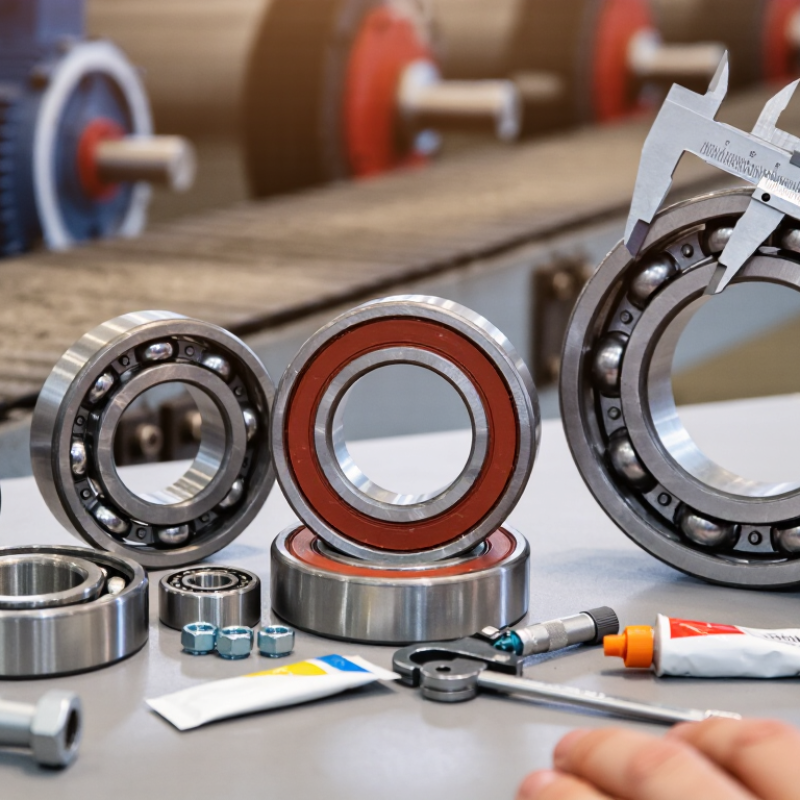
Bearing Types and Their Roles in Modern Applications
Ball bearings suit high-speed electric motors, fans, and compact robotic joints.
Their low friction helps shafts rotate smoothly with modest energy loss.
Roller bearings carry heavier radial loads in conveyors, gearboxes, and industrial machines.
Cylindrical rollers handle strong radial forces, while tapered rollers also manage axial loads.
Thrust bearings support forces moving along a shaft.
They appear in pumps, screw drives, and rotating platforms.
Needle bearings use thin rollers where installation space is limited.
Plain bearings can work well in hinges, slow pivots, and dusty environments.
They have fewer rolling parts, but lubrication and surface condition remain important.
Bearing selection should begin with the actual load, speed, temperature, and available space.
Engineers also check shock loads, shaft alignment, contamination, and expected service life.
A dusty conveyor may need strong sealing, while a high-speed spindle demands accurate balance and controlled lubrication.
I have seen failures caused by poor installation rather than weak bearing design.
Small misalignment can create heat marks within hours.
It is easy to overlook this.
Housing stiffness, shaft fits, and maintenance access deserve equal attention.
Load ratings provide guidance, not certainty, because real machines rarely operate under perfectly stable conditions.
A practical choice may sacrifice maximum speed for easier inspection and longer field reliability.
Key Operating Conditions That Guide Bearing Selection
2026 Best Bearings: Which Factors Affect Bearing Selection?
Key Operating Conditions That Guide Bearing Selection
Bearing selection starts with the machine’s actual working conditions, not a catalog preference. Identify radial loads, axial loads, shock levels, and load changes during each cycle. A conveyor pulley may face steady radial force, while a gearbox bearing can experience reversing loads. These differences matter.
Speed changes the calculation. High rotational speed increases heat, lubricant stress, and cage demands. Temperature also deserves close attention. Near a furnace, cold storage unit, or outdoor drive, standard clearance may become unsuitable. Shaft expansion can reduce internal clearance. I have seen this overlooked during otherwise careful designs.
Contamination often decides service life. Dust, water, metal particles, and cleaning fluids require suitable seals, shields, materials, or relubrication plans. Lubricant viscosity must match speed and temperature. Too much grease can create heat. Too little can cause rapid wear. It sounds simple.
Alignment and housing stiffness are equally important. Misalignment may call for a self-aligning design, but it should not hide a bent shaft or weak mounting. Check shaft fits, housing tolerances, installation force, and access for maintenance. A bearing can have adequate calculated life yet fail early after poor mounting.
Use verified dynamic and static load ratings, clearance values, and life calculations from standards-based technical data. Consider noise, vibration, electrical exposure, and expected downtime. The cheapest selection is not always the lowest-cost choice. I still question calculations that ignore real startup loads. Field conditions are often less tidy than the test sheet.
Load, Speed, Temperature, and Lubrication Requirements
2026 Best Bearings: Which Factors Affect Bearing Selection?
Selecting a bearing begins with the real load, not the catalog description. Radial load presses across the raceway, while axial load pushes along the shaft. Combined loads require careful calculation. A small conveyor may seem lightly loaded, yet shock from uneven materials can change the selection completely. Static capacity matters during stoppages. Dynamic capacity matters during operation. Safety margins should reflect actual working conditions, not optimistic estimates.
Speed also controls heat, noise, and service life. A bearing running at 3,000 revolutions per minute needs different clearance than one moving slowly under heavy pressure. Temperature changes internal clearance and lubricant behavior. Near a hot oven, ordinary grease may soften or separate. In a cold room, it may become too thick. Measure the housing temperature after steady operation. Guessing is cheaper at first, but often expensive later.
Lubrication deserves equal attention. Too little lubricant creates metal contact, while too much raises friction and temperature. Use the recommended viscosity range and relubrication interval. Dust, water, and cleaning chemicals can shorten life quickly, even with correct loading. Sealing must match the environment. A clean test bench can hide field problems. That is an uncomfortable lesson. Bearing selection is not always perfect on the first attempt. Review vibration, temperature, and wear marks after installation, then adjust the design when evidence disagrees.
Material, Sealing, Maintenance, and Service-Life Considerations
Bearing selection starts with the working environment, not the catalogue number. Material must match load, speed, temperature, and corrosion exposure. Through-hardened steel suits heavy industrial loads and repeated shock. Stainless steel helps where moisture or cleaning chemicals are unavoidable. Ceramic rolling elements can reduce electrical damage, but they require careful fit and cost review.
Sealing deserves equal attention. A labyrinth seal may run cooler at high speed, while a contact seal offers stronger protection against dust and water. Over-sealing can increase friction. Under-sealing can invite abrasive particles. ISO 281:2007 defines basic rating life at a 90% reliability level, meaning ten percent may fail earlier under identical conditions. That figure is useful, but real machines are less predictable.
Maintenance often decides whether calculated life becomes practical life. The U.S. Department of Energy’s Operations & Maintenance Best Practices guide reports predictive maintenance can reduce costs by 8–12% versus preventive maintenance, and 30–40% versus reactive maintenance. Use clean grease, correct quantities, and documented relubrication intervals. Vibration readings can reveal looseness before a bearing becomes hot to the touch. Temperature trends matter too. One missed contamination event can erase months of planning. I would not treat any service-life estimate as guaranteed; poor mounting, misalignment, and neglected seals can still defeat excellent material selection.
How to Compare Bearing Performance, Cost, and Reliability
Selecting a bearing in 2026 means comparing more than purchase price. Performance starts with the actual duty: radial and axial loads, shaft speed, operating temperature, contamination, and available space. A bearing that handles a high static load may still fail under vibration or poor lubrication. Use load ratings and speed limits from verified technical data. Then compare them with measured machine conditions. Small details matter. A dusty conveyor needs different protection from a clean, temperature-controlled motor.
Cost should include installation, lubrication, inspections, energy loss, and replacement downtime. A low-priced bearing may become expensive if it needs frequent changes. Conversely, an oversized bearing can waste money and create fitting problems. Compare cost per operating hour, not only the invoice. Request traceable material records, dimensional tolerances, and test information from qualified suppliers. Independent inspection is useful when failure would stop production.
Reliability depends on design and maintenance working together. Review fatigue life calculations, sealing performance, clearance, and grease compatibility. Keep temperature, vibration, and noise readings during service. These records expose problems before seizure or unexpected shutdown. Still, calculations are not perfect. Shock loads and poor alignment are easy to underestimate. This is where practical judgment matters. Trial a bearing in a controlled application when data leaves doubt. Document temperature, vibration, and replacement intervals after the trial.
2026 Best Bearings: Which Factors Affect Bearing Selection?
A normalized comparison of common bearing types across relative cost, dynamic load capacity, and high-speed suitability. The deep-groove ball bearing is used as the 100-point reference. Actual performance depends on load, speed, lubrication, contamination, alignment, and operating temperature.
Deep-groove ball bearings generally provide the best balance of low cost, high speed capability, and versatility. Cylindrical and tapered roller bearings offer higher load capacity, while spherical and needle roller bearings are selected for specific load, misalignment, or space requirements. Reliability is strongly influenced by correct sizing, lubrication, sealing, installation, and maintenance.
FAQS
Measure both radial and axial loads. Combined loads require careful calculation. Shock from uneven materials can change the selection. Static capacity matters during stoppages, while dynamic capacity matters during operation.
Speed influences heat, noise, clearance, and service life. A bearing at 3,000 revolutions per minute may need different clearance than a slow, heavily loaded bearing. Confirm speed limits using reliable technical data.
Temperature changes internal clearance and lubricant behavior. Grease may soften near a hot oven or thicken in a cold room. Measure housing temperature after steady operation. Guessing seems cheaper, but it often costs more later.
Too little lubricant can create metal contact. Too much can increase friction and temperature. Use the recommended viscosity range, quantity, and relubrication interval. Clean grease matters.
Abrasive dust, water, and cleaning chemicals can shorten service life quickly. A contact seal offers stronger protection against contamination. A labyrinth seal may run cooler at high speed. The best choice depends on the environment.
Hardened steel suits heavy loads and repeated shock. Stainless steel helps in wet areas or where cleaning chemicals are present. Ceramic rolling elements may reduce electrical damage, but fit and cost need review.
No. Basic rating life commonly uses a 90% reliability level, so some bearings may fail earlier. Misalignment, poor mounting, contamination, and neglected seals can defeat good calculations. Still, estimates remain useful planning tools.
Record vibration, temperature, noise, and replacement intervals. Vibration can reveal looseness before the bearing feels hot. Predictive maintenance may reduce costs compared with reactive maintenance. One contamination event can erase months of planning.
Compare cost per operating hour, not only the purchase invoice. Include installation, lubrication, inspections, energy loss, and downtime. An oversized bearing can waste money and create fitting problems. Low price is not always low cost.
Trial the bearing in a controlled application. Record temperature, vibration, noise, and replacement timing. Review wear marks after installation. Practical evidence may disagree with calculations. That uncomfortable result deserves attention.
Conclusion
Selecting the right bearing is essential for achieving stable performance, long service life, and cost-efficient operation in modern machinery. Bearing types serve different purposes, so the selection process should begin by matching the design with the application’s load direction, available space, alignment requirements, and expected motion. Understanding which factors influence bearing selection helps engineers evaluate operating conditions more accurately and avoid premature failure.
Key considerations include radial and axial loads, operating speed, temperature range, lubrication method, contamination risks, and required service life. Material choice, sealing structure, maintenance access, installation conditions, and resistance to wear or corrosion also affect reliability. A complete comparison should balance performance, purchase and operating costs, maintenance frequency, energy efficiency, and long-term dependability. By assessing these elements together rather than focusing on a single specification, users can select a bearing solution that delivers consistent operation, practical maintenance, and suitable value throughout its working life.

 Ebmotrix Bearings